
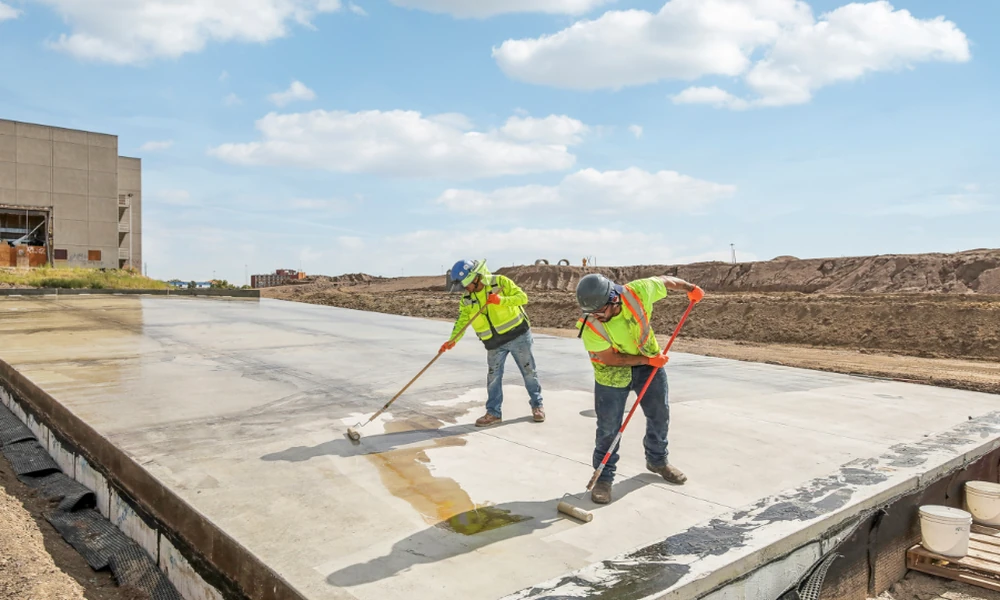
Water entering concrete, passing through it, or causing damage inside it can be stopped with a few proven materials and methods. Among the main concrete waterproofing solutions are crystalline admixtures, cementitious coatings, liquid membranes and sheet membranes. The choice of the right one depends on the type of structure, the water pressure, and the stage at which the protection is carried out, during construction or later after it.
Why does concrete leak when it looks solid?
Concrete appears very hard and dense on the outside, but in fact it contains many tiny holes. Builders use more water than the cement really requires, when mixing, because the mix must be easy to handle. As the drying process takes away this extra water, it leaves small channels in the concrete. The water can flow through these channels and it flows faster when there is pressure.
The second reason is cracks. The shrinkage, temperature change, and minor movement of the structure cause fine cracks. It is no hard task for water to enter through cracks like that.
What Are The Primary Types of Waterproofing For Concrete?
Not all methods work the same way, and a few are very common.
- Crystalline waterproofing: some chemicals react with moisture and cement and the crystals which are formed fill the pores and fine cracks inside the concrete.
- Cementitious coatings: slurry of cement is applied to the surface with brush or spray and it forms a hard protective layer.
- Liquid membranes. A polymer or bituminous liquid is spread on the surface and after curing it becomes one flexible film with no joints.
- Sheet membranes: rolls of bitumen, PVC or similar material are produced in factory and fixed on top of the concrete.
Some of these methods protect only the surface. Some other methods protect from within the concrete.
What is Crystalline Waterproofing?
There is one simple chemical reaction under crystalline technology. The active chemicals can either be mixed into the fresh concrete or applied to the surface of hardened concrete. When water is added, these chemicals touch the moisture and the unhydrated cement particles, and the reaction begins.
The reaction forms crystals in needle shape . These crystals keep growing inside the pores and the hairline cracks . They dam up the usual course of water. This way the concrete is not only covered from outside but also becomes a working part of the waterproofing system.
Also there is a self healing property . If after some time a new fine crack opens and water reaches it, the reaction starts again and the crack may be sealed again. This is possible only for small cracks, usually the ones having width of a fraction of millimetre.
Where Is Waterproofing Most Used?
Any concrete that remains in contact with moisture or water pressure needs protection. Some common places are listed below.
- Basements and foundations
- Reservoirs and water tanks
- Swimming pools
- Tunnels and underground metro structures
- Parking structures & podium decks
- Sewage and wastewater treatment plants
- Bridges, dams & marine structures
Even higher is the need in areas with heavy rainfall, high groundwater level or big temperature changes if a long service life is expected.
What happens when concrete isn’t waterproofed?
Water is concrete’s number one enemy. It also gets inside together with harmful substances, such as chlorides and sulphates. After a while, various problems begin to show up.
- Steel corrosion: moisture and chlorides penetrate the reinforcement bars. The bars rust and expand. Then the concrete around them splits and drops off.
- Efflorescence. Salts dissolved by water are carried to the surface and leave white marks.
- Freeze and thaw damage: water inside concrete freezes and expands in cold weather. The material is broken from the inside.
- The presence of mould and damp makes the interior rooms unhealthy and uncomfortable to stay.
- Loss of strength: continuous deterioration of the structural element leads to a decrease in the load carrying capacity.
Normally, it costs much more to repair a structure which is already damaged than to protect it at the beginning.
How long does the waterproofing last?
The life of the waterproofing depends on the system used and the conditions in which it is used. Surface coatings and membranes can wear out due to sunlight, movement or physical damage and may need to be replaced after a few years. The systems working within the concrete are not subject to such wear and therefore can provide protection for the full service life of the structure if properly applied.
Surface preparation and good curing and proper dosage or application rate are also very important for the final result. Even a high quality product cannot perform well if the application is poor.
Is waterproofing only required for underground structures?
No, it is not needed only for basements. The roofs, terraces, balconies, bridge decks and exterior walls also have to face the rain, humidity and carbon dioxide and all of them attack the concrete. Water coming in above ground can be just as damaging as the groundwater pressure from below.
Conclusion
Water is concrete’s most common enemy and every durable structure needs a plan to keep it out. Concrete waterproofing solutions are surface treatments that protect the reinforcement, retain the strength and increase the life of buildings and infrastructure through internal crystalline reactions, coatings or membranes. Once we know how each method works, it is easy to match the protection to the demand of the structure.