
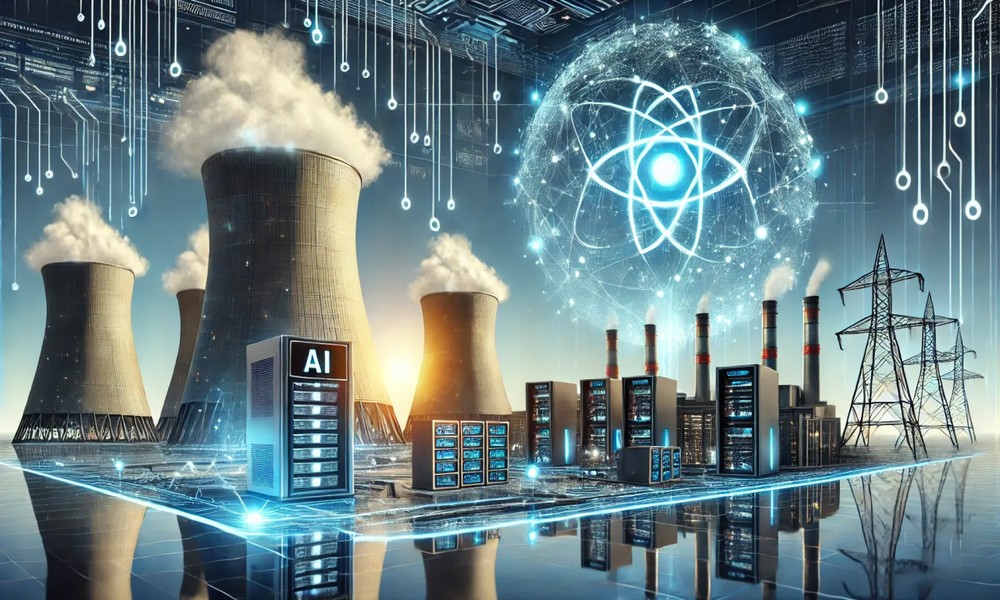
The numbers are staggering. Q1 2026 alone saw the four largest hyperscalers spend $130.6 billion on AI infrastructure – data centers, GPUs, and cloud capacity. Full-year 2026 capex is still guidance or run-rate based, but the direction is clear: infrastructure spending is stepping higher again. This isn’t theoretical spending – it’s 39 major data centers across 4 countries, 7.1 gigawatts of current power and 35.2 gigawatts of projected power, and a race for dominance that’s reshaping global investment. The AI CapEx Tracker monitors every dollar of it in real time.
The Scale of the Bet
If you’re not tracking AI capital expenditure closely, you’re missing one of the most important economic stories of our time. Companies like Amazon, Google, and Microsoft aren’t just talking about AI – they’re betting hundreds of billions on the physical infrastructure to dominate it.
Q1 2026 Data: The Acceleration Continues
Q1 2026 earnings confirmed the AI infrastructure buildout has no ceiling in sight. The four largest hyperscalers spent a combined $130.6 billion in a single quarter – up sharply from $72.6 billion in Q1 2025. Alphabet Q1 2026 capex was $35.7B, Microsoft was $30.9B, Meta was $19.8B, and Amazon was $44.2B. Full-year 2026 figures are still guidance or run-rate estimates, not annual filing values.
The momentum by phase:
- 2022-2023: Building foundations, initial capacity buildout
- 2023-2024: Acceleration begins, major cloud regions expanding
- 2025-2026: Full sprint mode – record-breaking quarterly spend, guidance raised repeatedly
Who’s Spending the Most?
Q1 2026 tracker values and 2026 capex outlooks:
| Company | Q1 2026 (Filed) | 2026 Outlook |
| Amazon | $44.2B | ~$200B |
| Alphabet (Google) | $35.7B | $180-190B |
| Microsoft | $30.9B | ~$190B |
| Meta | $19.8B | $125-145B |
| Oracle | $18.6B* | ~$50B* |
| OpenAI | $8.5B* | ~$35B* |
| NVIDIA | $6B* | ~$25B* |
| Apple | $2.0B* | ~$8.7B* |
| Anthropic | $3.5B* | ~$15B* |
*Public-company quarterly figures are filing-backed where available. 2026 outlooks mix company guidance, calendar-year outlooks, and run-rate estimates; Microsoft is calendar-year 2026, not fiscal-year guidance. OpenAI, Anthropic, NVIDIA Q1 2026, and Apple annualized figures are estimates.
The standout: Meta guided to roughly $125-145 billion of 2026 capex, while Amazon remains the largest 2025 filing-backed spender at $131.8 billion and posted $44.2 billion of Q1 2026 capex. Full-year 2026 values should be treated as guidance or run-rate estimates until annual filings arrive.
The Infrastructure Buildout: 39 Data Centers Across the Globe
Capital spending on this scale demands physical instantiation. The AI CapEx Tracker is currently monitoring 39 major facilities – 23 operational and 16 under construction – across 4 countries with 7.1 gigawatts of current power and 35.2 gigawatts of projected power.
These aren’t traditional data centers. They’re purpose-built for AI workloads – optimized for GPU density, power distribution, and extreme cooling demands.
Largest Facilities
Meta’s Richland Parish AI Campus in Louisiana is the single largest facility under construction – a 4 million square foot, $27 billion campus targeting 2.0 gigawatts of compute capacity (with potential to scale to 5 GW). The campus began major construction in early 2026 and is expected to be fully operational by 2030, with power infrastructure online by end of 2028.
Other major facilities:
- Meta Hyperion: 0 MW current, 2.262 GW projected, operational since 2023
- Meta Hyperion: 0 MW current, 2.262 GW projected
- OpenAI Stargate New Mexico: 0 MW current, 2.210 GW projected
- OpenAI Stargate Shackelford: 0 MW current, 1.960 GW projected
- QTS Cedar Rapids: 0 MW current, 1.587 GW projected
The Investment Announcements: Multi-Billion Commitments
Beyond quarterly CapEx, public investment pledges reveal long-term strategy:
- Amazon: $131.8B filing-backed 2025 capex; Q1 2026 capex was $44.2B
- Microsoft: $83.1B calendar-year 2025 capex; Q1 2026 capex was $30.9B
- Alphabet: $91.4B filing-backed 2025 capex; Q1 2026 capex was $35.7B
- Meta: $72.2B calendar-year 2025 capex; Q1 2026 capex was $19.8B
- Oracle: $35.5B calendar-year 2025 capex; Q1 2026 tracker capex was $18.6B
- Country-level investment announcements require source-by-source verification; treat unsourced country rows as directional, not filing-backed.
Why This Matters
AI flips the capital-light software narrative. Training large models and serving them at scale requires specialized chips, purpose-built data centers, massive power infrastructure, and cooling systems. This favors cash-rich incumbents. Startups cannot compete on infrastructure alone.
Compute is becoming the bottleneck, not innovation. The companies that own the most capacity will set the pace of AI advancement. And power availability will be the ultimate constraint – not budgets. Companies are already turning to nuclear energy, natural gas, and geographic arbitrage to secure power for facilities that are being built right now.
The Bottom Line
The AI infrastructure race is the economic story of the 2020s. Understanding who’s spending what, where, and why is essential for anyone tracking technology, investment, or the future of computing. Follow every dollar at the AI CapEx Tracker.