
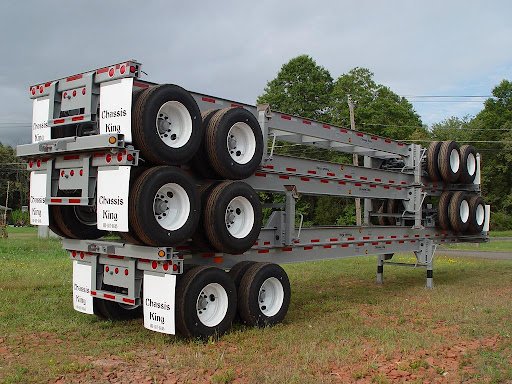
Understanding the various dimensions of a container chassis is vital for logistics professionals involved in the transportation of shipping containers between ports, rail terminals, warehouses, and final delivery points. A container chassis serves as the essential framework that supports containers during transit by truck, enabling efficient intermodal movement across different modes of transport. Since containers come in a range of standardized sizes, chassis manufacturers design their products to accommodate these variations and comply with road safety regulations.
Below are the main container chassis sizes that help make logistics and transport more efficient:
20-Foot Container Chassis Dimensions
A 20-foot container chassis is made to carry a standard 20-foot shipping container. It is usually 20 feet long and 8 feet (96 inches) wide, matching the container’s base for good support. The width follows safety rules for highways. These chassis are often used for short trips or smaller loads, making them a flexible choice for many shipping needs.
40-Foot Container Chassis Dimensions
The 40-foot container chassis is the most common type used in global shipping and intermodal transport. It is built for standard 40-foot containers and is also 8 feet wide, but has a longer frame for bigger loads. This chassis must follow strict rules for bridge laws and axle spacing to keep weight balanced and roads safe. Its flexibility makes it a good choice for both local and long-distance deliveries.
Specialized Container Chassis Dimensions
Specialized chassis containers are made to meet specific needs and give logistics professionals more options for moving cargo. They are designed for unique loads like oversized items and heavy equipment.
One example is the extendable chassis, which can carry longer or oversized cargo. These chassis can be adjusted to different lengths, making them useful for large shipments.
A tri-axle container chassis is built for heavy-duty shipping. It spreads the container’s weight over three axles, which gives better stability and reduces road wear. This type is used for heavy or oversized containers.
Conclusion
Knowing the sizes and types of a chassis container is key to running smooth logistics operations. This helps make sure goods are moved efficiently, safely, and according to transport rules.
Besides size, weight, and delivery routes, it’s also important to check local road conditions and restrictions when picking the right container chassis. Choosing the right chassis helps make freight movement smoother, safer, and more cost-effective.