
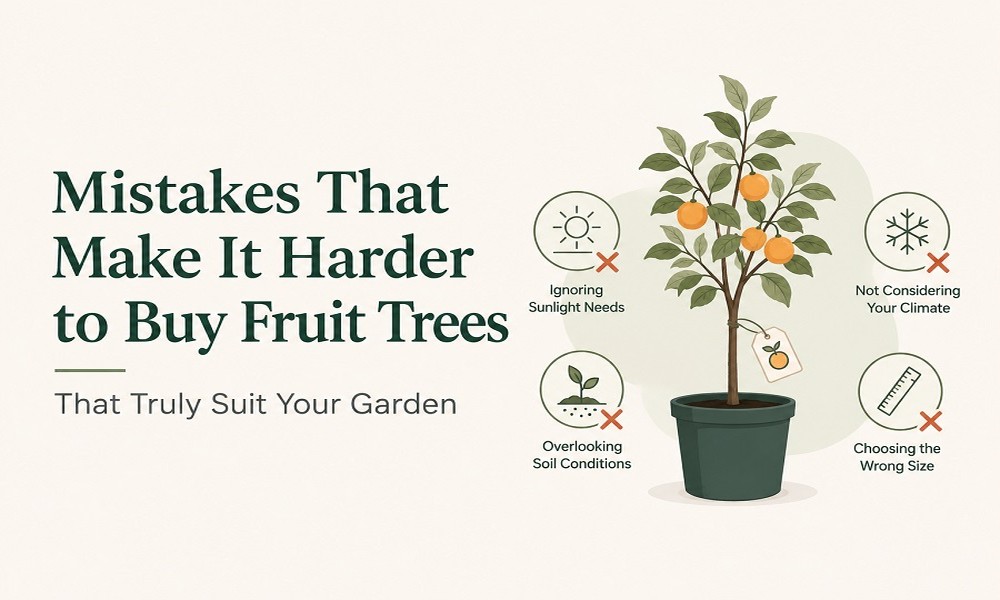
Most poor fruit tree choices begin with a reasonable impulse. A gardener likes a fruit, remembers a tree from childhood, sees an attractive trained form, or wants a quick way to make the garden productive. The problem is not enthusiasm. The problem is skipping the checks that turn enthusiasm into a tree that actually suits the garden.
A fruit tree is a long-term decision, so small mistakes can last. Planting in the wrong place, ignoring rootstock, forgetting pollination, or choosing fruit the household will not use can all make the tree harder to enjoy. The good news is that these mistakes are avoidable with a calmer approach.
For gardeners planning to buy fruit trees, the online fruit tree nursery https://www.fruit-trees.com/ recommends looking beyond the fruit itself and thinking about the whole garden setting. Soil, light, mature size, pollination, access, and the way the household will actually use the crop all have a direct influence on whether a young tree becomes a long-term success.
This article looks at selection mistakes rather than planting mistakes. It is written for British gardeners who are still deciding what to order and want to avoid creating problems that pruning and aftercare cannot easily solve later.
A useful way to approach avoiding poor fruit tree selection is to imagine the tree after three ordinary seasons, not just on the day it arrives. By then, the garden will have tested the original choice through wet soil, dry spells, pruning, blossom, pests, and the first serious attempts at cropping. If the tree still has enough room, remains easy to reach, and produces fruit the household wants to use, the buying decision was probably sound. That longer view keeps the article focused on practical success rather than on quick enthusiasm. It also reminds the gardener that a suitable tree should become easier to understand, not harder to live with, as the seasons pass.
Mistake One: Choosing Fruit Before Choosing the Site
The first useful question is not which fruit sounds most appealing, but whether site-first decision making supports the kind of tree the garden can carry. The site should lead the choice. For British gardeners who want a tree that genuinely suits their plot, this early judgement keeps the choice grounded in the real plot rather than in an idealised version of it.
In practice, that means checking light, drainage, wind, frost, and access before settling on a fruit or variety. These details may sound ordinary, yet they decide whether the tree can be reached, watered, shaped, and enjoyed once it starts to grow with confidence. A young tree is easy to place badly because it arrives small; the mature tree is much less forgiving.
A shaded town garden and a warm sheltered wall offer very different possibilities. British gardens often contain several microclimates in a surprisingly small space, so a single walk around the plot is rarely enough. Morning light, afternoon shade, wind movement, and winter wet can each tell a different part of the story.
The easy error is falling in love with a fruit that does not suit the available position. At first the tree may appear to cope, but a poor match usually becomes visible in weak growth, uneven cropping, or awkward maintenance. Selection is much easier than correction.
Handled carefully, the tree is chosen for conditions it can genuinely handle. The site should be considered in winter wet, spring frost, summer dryness, and autumn harvest. The tree begins as a planned part of the garden rather than a hopeful addition, which is exactly what makes mistake-aware fruit tree selection more dependable over time.
It is worth making this assessment slowly, even if the final decision feels simple. A few notes about light, soil, shelter, and access can prevent the gardener from being pulled toward a tree that suits the imagination better than the plot.
Mistake Two: Treating Rootstock as Fine Print
This is where the decision becomes more specific. Rootstock is central to whether the tree fits. The gardener is no longer thinking only about fruit, but about the shape, habit, and working space of the tree. That shift is especially helpful for British gardeners who want a tree that genuinely suits their plot.
The practical choice is using rootstock information to judge final size, vigour, support, and container suitability. It affects the supports required, the amount of pruning, the future spread, and how comfortably the crop can be picked. A form that suits the site can make the tree feel calm and intentional from the beginning.
Many British gardens are too small for a tree chosen without size control in mind. A boundary, patio, lawn edge, or open border may all be possible, but they do not ask for the same tree. Reading those differences prevents the garden from being asked to accommodate a form that belongs somewhere else.
Problems often start with believing that hard pruning can solve every size problem later. Once the tree is planted, every season adds growth and makes a mismatch harder to ignore. It is better to narrow the choice before buying than to fight the tree for years afterward.
The reward is that growth remains more proportionate and easier to manage. The correct rootstock reduces future maintenance pressure. This kind of choice gives the gardener more control without making the planting feel stiff or over-managed.
The best form is usually the one that makes future care look obvious. If the gardener can picture where shoots will grow, where the crop will hang, and how pruning will happen, the tree is already more likely to succeed.
Mistake Three: Forgetting Pollination
A useful way to judge this stage is to imagine the tree in the middle of the growing season, not just on planting day. Pollination should never be left as an afterthought. If the tree will affect nearby planting, views, or movement, those effects should be considered before the order is placed.
The practical side is checking self fertility, compatible partners, flowering times, and nearby trees. Good fruit growing is often shaped by these modest details. They influence airflow, light, watering, and whether the tree remains pleasant to work around once it has settled into the garden.
Cold or wet spring weather can make reliable pollination planning even more important. In Britain, damp spells and changeable springs can make crowded or poorly ventilated positions more troublesome than they first appear. A little extra space around the framework can prevent several later problems.
The choice becomes weaker when the gardener is assuming blossom will automatically lead to fruit. That may give a fuller look for a short time, but it can limit establishment and make disease or poor fruit set more likely. Productive planting needs enough restraint to stay healthy.
With the right balance, the tree has a stronger chance of cropping well. Good pollination planning becomes visible when fruitlets begin to form. The garden gains seasonal richness without sacrificing the practical conditions the tree needs.
This is also where patience helps. A young fruit tree does not have to look complete immediately. Leaving room for air, roots, and future growth often produces a better-looking and more productive result after a few seasons.
Mistake Four: Ignoring How the Garden Is Used
Maintenance should be designed into the choice. A tree must work around real household movement. If a task is awkward, it is more likely to be delayed, and delayed fruit tree care often becomes heavier than regular light care.
The key practical issue is allowing for paths, play, seating, pets, storage, mowing, and harvest access. A tree may be perfectly suitable horticulturally and still become frustrating if every check requires moving furniture, stepping into wet soil, or reaching across dense planting.
Compact gardens often require each part of the space to serve several uses. Weather adds pressure to awkward access because the best time for a job may fall during a short dry spell or a brief window of daylight. A convenient tree is more likely to receive timely care.
The avoidable mistake is planting where the tree interrupts daily life. This turns ordinary seasonal work into a bigger job than it needs to be. Over several years, inconvenience can do as much damage as a poor variety choice.
When access and care are planned well, the tree feels useful rather than inconvenient. A position that works during harvest and pruning will also be easier to live with year-round. The tree becomes easier to understand because the gardener can observe it regularly rather than only when something looks wrong.
A simple maintenance route is not wasted space. It is part of the tree’s success. The easier it is to reach the trunk, branches, and root zone, the more likely small seasonal tasks are to happen at the right moment.
Mistake Five: Choosing the Wrong Crop for the Kitchen
The crop should have a purpose. The harvest should match household habits. Fruit trees are most satisfying when the harvest fits the household, whether that means fresh eating, cooking, storage, preserving, sharing, or simply a few special bowls each season.
The practical decision is thinking about fresh eating, cooking, preserving, storage, ripening time, and crop volume. This keeps the tree connected to real use rather than to a vague idea of productivity. A crop that nobody wants can make even a healthy tree feel like a poor choice.
Some varieties produce abundance in a short window, which needs planning. Timing matters in British gardens because harvests often arrive in concentrated windows. A variety that ripens during a busy or absent period may be less useful than one with a more convenient season.
The common trap is choosing a tree because the fruit sounds impressive but rarely gets used. Appearance, novelty, or reputation can distract from the simple question of what the household will actually do with the fruit. That question deserves to be asked early.
When crop and household fit together, the crop becomes welcome rather than wasteful. A useful harvest strengthens the gardener’s attachment to the tree. The harvest becomes part of the garden’s rhythm rather than a problem to solve at the last minute.
This practical thinking does not remove pleasure from the choice. It increases it. Fruit that has a place in the kitchen, lunch box, preserving pan, or shared bowl is fruit that gives the tree a stronger role in the household.
Mistake Six: Expecting the Tree to Fix the Garden Alone
The final decision is about the long view. A fruit tree improves a garden best when the wider setting supports it. A fruit tree is not a seasonal decoration; it is a framework plant that will change the garden over years. That makes long-term fit a strategic choice.
The practical long-term detail is combining correct siting, soil improvement, shelter, watering, pruning, and realistic expectations. It affects how the tree will age, how much pruning it will need, and whether it will remain proportionate as surrounding planting, shade, and household routines change.
Variable weather means aftercare still matters even with a strong choice. British gardens rarely stay exactly as they were at planting time. Neighbouring trees grow, fences change, families use spaces differently, and weather patterns vary from year to year.
The mistake here is treating the tree as a one-purchase solution to productivity, privacy, and beauty. One good crop or one attractive season is not enough if the tree becomes too large, too awkward, or too demanding later. The best choice has room to mature gracefully.
Planned with patience, the tree becomes one strong element in a healthier garden. Success builds through several seasons of observation and adjustment. That steady, observant approach is what makes mistake-aware fruit tree selection feel achievable rather than specialist.
A tree chosen with the long view in mind becomes easier to forgive in lighter cropping years, because its value is broader than a single harvest. It contributes shape, blossom, wildlife interest, shade, memory, and the promise of future seasons.