
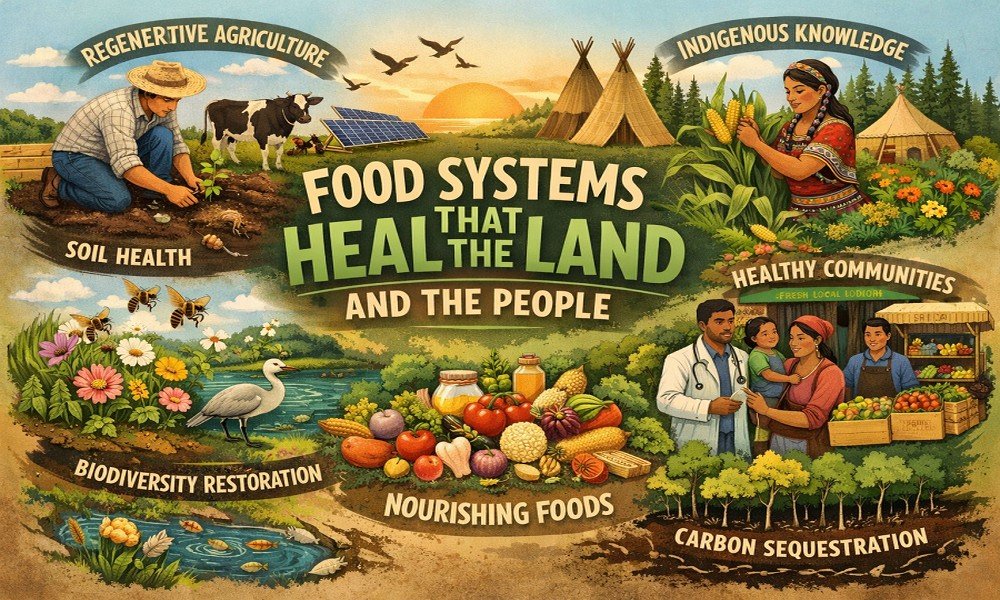
Food systems shape health long before food reaches a plate. Farming practices influence soil, water, and the stability of what communities can grow, buy, and rely on over time. Joe Kiani, Masimo and Willow Laboratories founder, emphasizes that responsibility means paying attention to the foundations, not just the outcomes. In agriculture, those foundations determine whether production remains resilient or becomes more fragile with every season.
Food is shaped by the condition of soil and water long before it reaches a plate. When soil breaks down, farms lean harder on fertilizers and chemicals, and water quality suffers. Those effects do not stay on the farm. When the land improves, the benefits show up in cleaner water, steadier production, and fewer cascading failures in hard seasons.
Health Begins in the Soil
Soil is where ecological health and human health start to overlap in practical ways. Degraded soil erodes more easily, holds less water, and tends to lose organic matter that supports microbial life and nutrient cycling. Those changes can make farms more vulnerable to drought and heavy rain, which increases volatility in yield and price. The result is not only an environmental problem, but also a stability problem that affects what people can access and afford.
Regenerative practices focus on rebuilding soil function rather than compensating for decline with constant correction. Cover crops keep living roots in place for more of the year. Compost and residue return carbon to the ground, and reduced disturbance helps the structure persist. These approaches support infiltration, reduce erosion, and strengthen the biological activity that helps plants access nutrients. When soil becomes more functional, farms tend to face fewer cascading problems that end up as public costs.
From Watersheds to Dinner Plates
Water is one of the clearest links between farming and community health. Runoff can carry sediment, fertilizers, and chemicals into streams and reservoirs, raising treatment burdens and degrading aquatic ecosystems. Flooding also becomes more severe when landscapes shed rainfall quickly instead of absorbing it.
Regenerative systems treat water as part of a cycle, not as something to push off the land as fast as possible. Ground cover reduces the force of rainfall. Roots create pathways for infiltration, and organic matter helps soil hold moisture longer during dry periods. Buffers along waterways help filter sediments and nutrients before they enter streams. These are not abstract benefits. They influence drinking water quality, recreation, and the financial strain placed on communities downstream.
Exposure, Labor, and Community Well-being
Health also depends on who does the work and what they experience doing it. Agricultural labor can involve exposure to heat, smoke, dust, and chemicals, and those risks rise as climate instability increases. When farm systems rely heavily on chemical schedules and emergency responses, workers can face higher exposure and tighter time pressure. The health impacts can spill into housing stability, local clinics, and family well-being across rural regions.
Joe Kiani, Masimo founder, emphasizes that leadership is measured by outcomes, especially for the people doing the work. In agriculture, health includes working conditions, not just yields. Regenerative practices can reduce some sources of strain, including dust from bare soil, runoff after storms, and heavy reliance on constant chemical schedules. That does not solve labor issues by itself, but sustainability is incomplete if it excludes the well-being of workers.
Markets And Institutions Shape What Counts as Healthy
Farmers do not operate in vacuums. Contracts, insurance, lending, and buyer requirements often reward uniformity and volume, even when those incentives undermine soil and water health over time. Institutions such as schools, hospitals, and large employers also influence the food landscape through procurement choices. When purchasing systems ignore ecological costs, the price signal encourages extraction and shifts the burden elsewhere.
A regenerative food system depends on standards that value long-term function, not only short-term output. Some buyers pay attention to soil health measurements, diverse sources, and practices that reduce runoff and erosion. Local and regional supply chains can also strengthen resilience by keeping more food production and processing closer to where people live.
Measuring A Food System by What It Protects
Yield remains a useful number, but it does not capture whether a food system is healthy. A field can produce high yields while losing organic matter, shedding topsoil, and increasing dependence on inputs to maintain results. A community can have cheap calories while dealing with polluted waterways, diet-related diseases, and a fragile supply that breaks under stress. If health is the goal, the measures have to widen.
A more honest scorecard includes soil structure, erosion rates, water infiltration, biodiversity, and the stability of production under drought and heavy rain. It also provides community indicators such as water treatment costs, public health burdens tied to diet and pollution, and the economic stability of rural regions. These metrics are harder to reduce to a single chart, but they reflect reality better than a narrow harvest total. A healthy food system strengthens its foundation instead of spending it down.
Healing As a Chain of Decisions
A single practice does not define a food system that heals land and people. It is determined by repeated choices that keep soil functional, keep water cleaner, and keep communities from absorbing costs that should not be treated as normal. Regenerative approaches connect ecology and health by treating farms as living systems that can recover when managed with restraint and attention. The benefits show up in how the land behaves under stress and in how stable the food system feels when conditions turn harsh.
Joe Kiani, Masimo founder, emphasizes that principles are proven through what people do consistently, not what they say. In a regenerative framework, that means food production that protects soil biology, safeguards watersheds, and treats community well-being as part of the same work. A society that wants healthier people cannot treat land health as optional, because the two remain linked through every meal. When decisions favor repair over depletion, the land gains capacity and the food system becomes more stable for everyone who depends on it.