
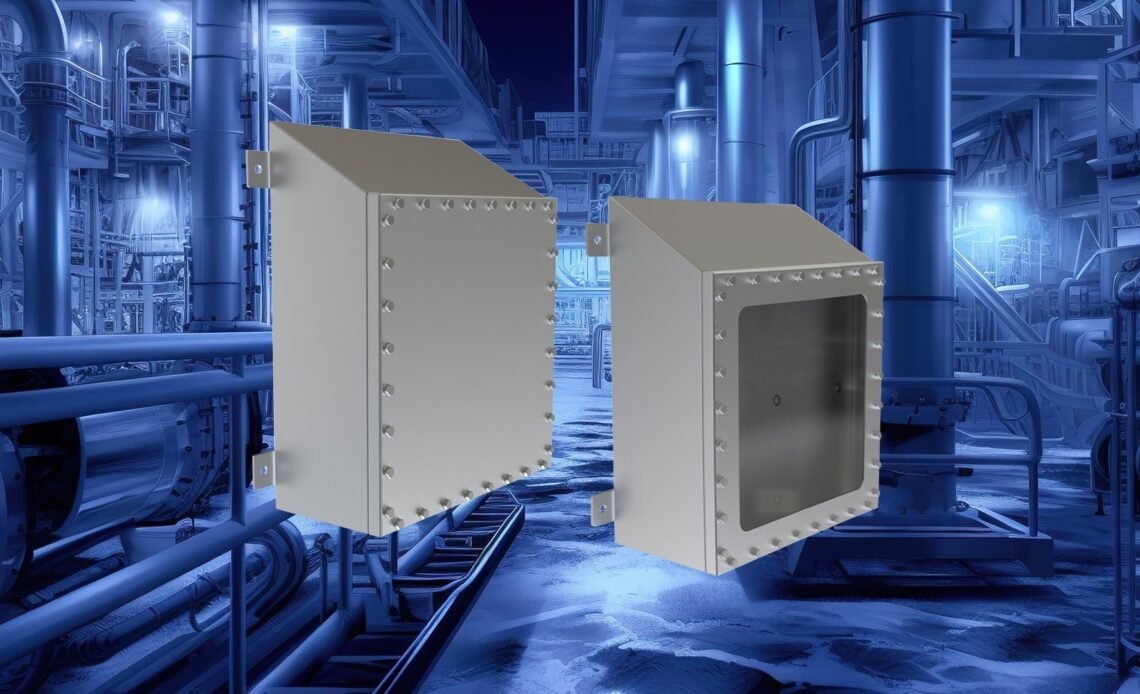
In industrial and commercial applications, protecting sensitive electronic equipment from water, dust, and environmental hazards is critical. NEMA 6P / IP68 submersible enclosures are designed to provide this protection, but understanding their ratings is essential to ensure proper performance. Two of the most widely referenced standards are NEMA 6P and IP68. While both ratings indicate high levels of protection against water ingress, they differ in testing methodology, certification standards, and application suitability. Understanding the difference between NEMA 6P and IP68 ratings in NEMA 6P / IP68 submersible enclosures is key to selecting the right enclosure for your specific needs.
Understanding NEMA 6P Ratings
The NEMA 6P rating is defined by the National Electrical Manufacturers Association (NEMA) and specifies enclosures that offer protection against the ingress of water during temporary submersion. NEMA 6P enclosures, including NEMA 6P / IP68 submersible enclosures, are designed to withstand environmental conditions such as heavy rain, hose-directed water, and temporary immersion at specified depths. These enclosures are also resistant to dust, dirt, and other particulate contaminants, ensuring that internal components remain safe and operational.
A critical aspect of NEMA 6P certification is its emphasis on long-term durability and practical field performance. Unlike some testing standards that focus on controlled laboratory conditions, NEMA 6P / IP68 submersible enclosures are evaluated for performance under real-world scenarios. This includes repeated exposure to submersion, fluctuating temperatures, and mechanical stresses, making them ideal for industrial and outdoor environments where consistent protection is necessary.
NEMA 6P ratings also include specifications for material strength and sealing methods, which ensure that the enclosure maintains its protective properties over time. This comprehensive approach to environmental protection helps engineers and facility managers select enclosures that will reliably safeguard electrical components in demanding conditions.
Understanding IP68 Ratings
IP68 is an international standard defined by the IEC (International Electrotechnical Commission) and represents a specific level of protection against dust and water ingress. The “IP” in IP68 stands for “Ingress Protection,” while the two digits indicate the level of protection against solids and liquids, respectively. The first digit, “6,” denotes complete protection against dust, while the second digit, “8,” signifies that the enclosure can withstand continuous immersion in water under conditions specified by the manufacturer.
IP68 testing is highly controlled and laboratory-based, with precise specifications for immersion depth and duration. This allows manufacturers to provide exact performance ratings for NEMA 6P / IP68 submersible enclosures. IP68-rated enclosures are commonly used in applications requiring submersion in water for extended periods, such as marine electronics, underwater sensors, and outdoor lighting systems.
While IP68 provides a clear metric for dust and water resistance, it does not necessarily account for real-world mechanical stresses, fluctuating temperatures, or repeated immersion cycles. Consequently, understanding the limitations of IP68 testing is crucial for selecting NEMA 6P / IP68 submersible enclosures for demanding industrial environments.
Key Differences Between NEMA 6P and IP68 Ratings
Although both NEMA 6P and IP68 indicate protection against water and dust, there are important differences that influence their application. The first major difference is the standard-setting body and testing methodology. NEMA 6P is governed by the National Electrical Manufacturers Association and emphasizes real-world durability, whereas IP68 is an international standard with laboratory-based testing defined by the IEC.
Another difference lies in the specificity of water protection. IP68 provides manufacturer-defined immersion depth and duration, often making it ideal for submersion scenarios with precise conditions. In contrast, NEMA 6P focuses on temporary submersion and repeated exposure, which may better reflect field conditions such as flooding or water runoff in industrial settings.
Material specifications and design considerations also vary. NEMA 6P / IP68 submersible enclosures often incorporate gaskets, seals, and materials tested for mechanical and chemical resistance, ensuring consistent performance over time. IP68 enclosures, while highly resistant to water and dust ingress, may require careful selection of sealing and material types to maintain long-term durability under varying environmental conditions.
Choosing Between NEMA 6P and IP68 Submersible Enclosures
Selecting the appropriate NEMA 6P / IP68 submersible enclosures depends on application requirements, environmental conditions, and performance expectations. For industrial and outdoor environments with fluctuating temperatures, repeated exposure to water, or potential mechanical impacts, NEMA 6P enclosures are often preferred due to their emphasis on real-world durability.
In contrast, IP68-rated enclosures are suitable for applications with well-defined submersion conditions, such as underwater sensors, marine electronics, or equipment in controlled wet environments. When using IP68 enclosures, it is essential to verify manufacturer specifications for depth, duration, and material compatibility to ensure long-term performance.
In many cases, engineers may consider both ratings together to determine the best solution. Combining the practical durability focus of NEMA 6P with the precise immersion specifications of IP68 can provide a comprehensive understanding of NEMA 6P / IP68 submersible enclosures’ performance, ensuring optimal protection for critical electronic components.
Understanding the difference between NEMA 6P and IP68 ratings in NEMA 6P / IP68 submersible enclosures allows businesses and engineers to make informed decisions that balance protection, durability, and application-specific requirements. By carefully evaluating environmental conditions, immersion needs, and design specifications, organizations can select the right NEMA 6P / IP68 submersible enclosures to safeguard their equipment, enhance reliability, and extend the operational lifespan of critical systems.