
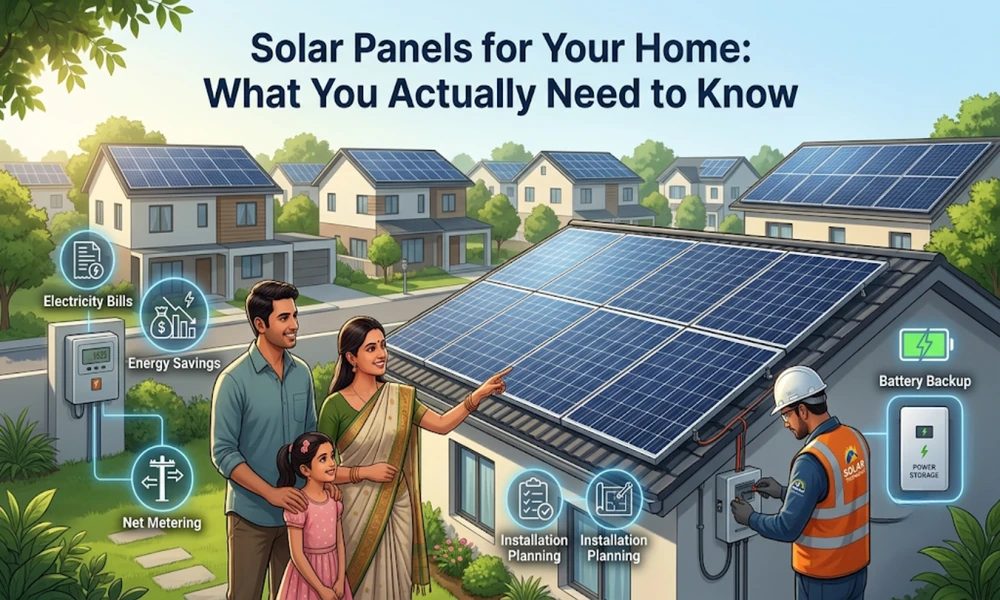
India’s rooftop solar sector is booming. If you’ve noticed more panels appearing on rooftops in your neighbourhood lately, you’re not imagining it. And if you’re thinking about making the switch yourself, here’s a practical breakdown of what it actually involves.
How Many Panels Does Your Home Need?
There’s no single answer, but you can get pretty close with some homework. Pull out your electricity bills from the last 12 months and look at your monthly unit consumption. Add them up and divide by 12. That average gives you a solid baseline. For example, if your electricity bill consistently runs between Rs. 1,500 and Rs. 2,000 a month, you’re likely consuming around 150 to 200 units, which usually maps to a 2 to 3 kW rooftop system.
The typical Indian household uses between 90 and 250 units per month, depending on family size and appliances. Where you live matters, too. Homes in western India get more peak sunlight hours than those in the northeast, so you might need fewer panels to generate the same output. Your installer can fine-tune this once they assess your roof.
What Does Installation Cost?
Costs have dropped substantially in recent years. Residential systems today typically start around Rs. 40,000 to Rs. 50,000 per kW installed, varying by panel quality and inverter type. Government subsidies under the PM Surya Ghar scheme can reduce this significantly for eligible homeowners. A 3 kW system covering most mid-sized households generally pays for itself within four to six years through electricity savings.
How Long Does the Process Take?
The physical installation takes just one to two days. The longer wait is paperwork. Permits, net metering approval and incentive applications typically add six to ten weeks. Your installer handles most of this, but it’s good to know upfront.
What Happens During a Power Cut?
Most grid-tied solar systems automatically shut off during outages. This is a safety feature that prevents your panels from feeding power into lines that utility workers might be servicing. If backup power matters to you, adding battery storage solves this completely.
Choosing the Right Panels
Quality matters more than most people realize. Cheap panels that underperform or degrade quickly end up costing far more over time.
India’s largest solar panel manufacturer, Waaree, now has over 25.8 GW of solar module manufacturing capacity across facilities in Gujarat and internationally. Their range covers everything from standard residential modules to high-efficiency TOPCon and HJT panels, ideal for homes with limited roof space. For homeowners wanting locally manufactured, well-tested panels from a trusted Indian brand, Waaree is worth putting on your shortlist.