
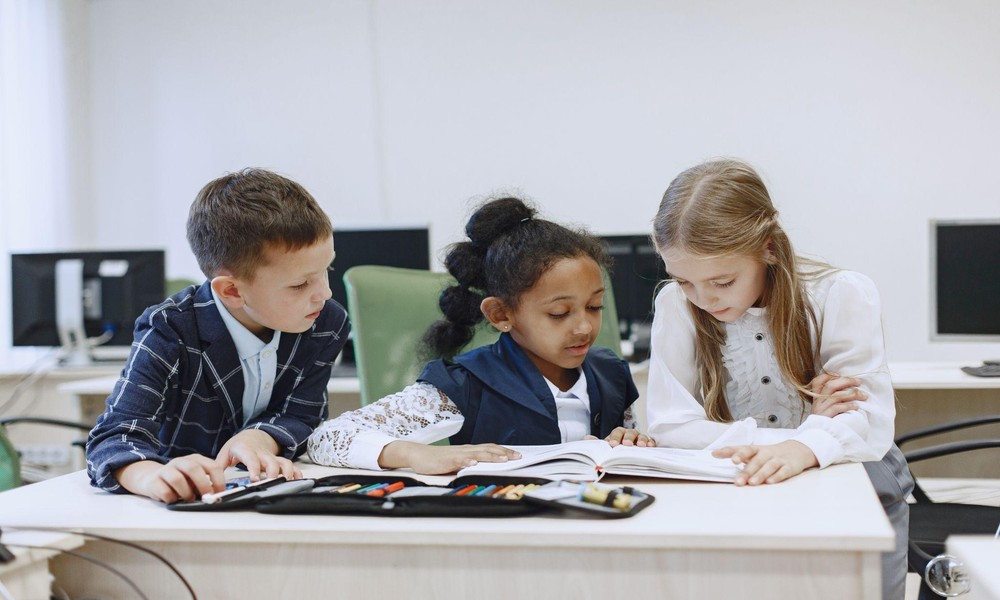
Key Highlights
- Cross-cultural competence drives future career success.
- Global curricula foster empathy and adaptability.
- Selecting the right learning environment is crucial.
Introduction
In an increasingly interconnected world, the ability to navigate diverse cultural landscapes is no longer just an asset; it is a necessity. As boundaries blur and the global economy becomes a reality, parents are faced with the challenge of preparing their children for a future that is dynamic, multicultural, and constantly evolving. This evolution has shifted the focus of early education from rote memorisation to the cultivation of a global mindset. By prioritising cross-cultural competence early in a child’s development, schools provide more than just academic knowledge; they provide the tools for lifelong adaptability.
The Essence of a Global Mindset
A global mindset is defined by curiosity, open-mindedness, and the capacity to view the world from multiple perspectives. It involves understanding that there is not one single correct way to solve a problem or interpret a situation. When children are exposed to different cultures and viewpoints during their formative years, they naturally develop a high level of cultural intelligence. This early exposure helps them become comfortable with ambiguity, a trait that is highly prized in modern university environments and the professional workforce.
The Role of Structured Academic Frameworks
To facilitate this growth, educators must rely on a framework that values breadth as much as depth. An international syllabus offers a structured approach that encourages students to connect local concepts to global phenomena. Rather than learning subjects in isolation, students are challenged to see the relevance of their studies within a worldwide context. This academic rigour ensures that learners are well-equipped to handle the complexities of different assessment standards while maintaining the flexibility to apply their skills in any international setting. By integrating varied perspectives into daily lessons, the curriculum transforms from a list of topics into a bridge between cultures.
Navigating Educational Choices
Choosing the right learning environment is a significant decision. When evaluating an international school in Singapore, parents should look for institutions that integrate character development with academic excellence. The best schools are those that actively promote interaction between students from varying backgrounds, creating a microcosm of the real world within the campus. This environment forces students to engage with others who may hold different beliefs, traditions, or communication styles. Consequently, these interactions become the most valuable lessons of their school years, teaching them how to resolve conflicts, listen actively, and appreciate nuances in human behaviour.
The Long-Term Impact on Professional Success
The real-world value of a globally minded education extends far beyond graduation. In the workforce, success is frequently linked to one’s ability to communicate across borders and work in international teams. Individuals who have developed cross-cultural competence during their schooling are uniquely prepared to lead. They are able to identify cultural nuances that might lead to misunderstandings, negotiate with diplomacy, and approach complex global issues with empathy. As businesses continue to operate on a planetary scale, the demand for these soft skills will only increase.
Holistic Development Beyond the Classroom
While academic curricula provide the foundation, the holistic development in education of a student is what solidifies their global perspective. Participation in exchange programmes, collaborative service learning projects, and international arts or sports initiatives allows students to step outside their comfort zones. These experiences foster resilience and confidence, teaching children that growth happens when they are willing to engage with the unknown. By the time students reach their final years of schooling, they are not merely academic achievers; they are globally aware citizens ready to contribute meaningfully to society.
Conclusion
Preparing children for the future requires a shift in priorities. It demands an educational approach that respects academic excellence while championing cultural awareness. By investing in an education that prioritises cross-cultural competence, parents are giving their children the most valuable gift possible: the ability to thrive in any environment. As we look ahead, the students who are most likely to succeed are those who see the world as a singular, diverse community, and who have the skills to build bridges across it.
Are you ready to give your child a head start in an increasingly globalised world? Contact us at St. Francis Methodist School to learn more about our programmes and how we foster a globally minded environment for every student. Let us help you shape their future today.