
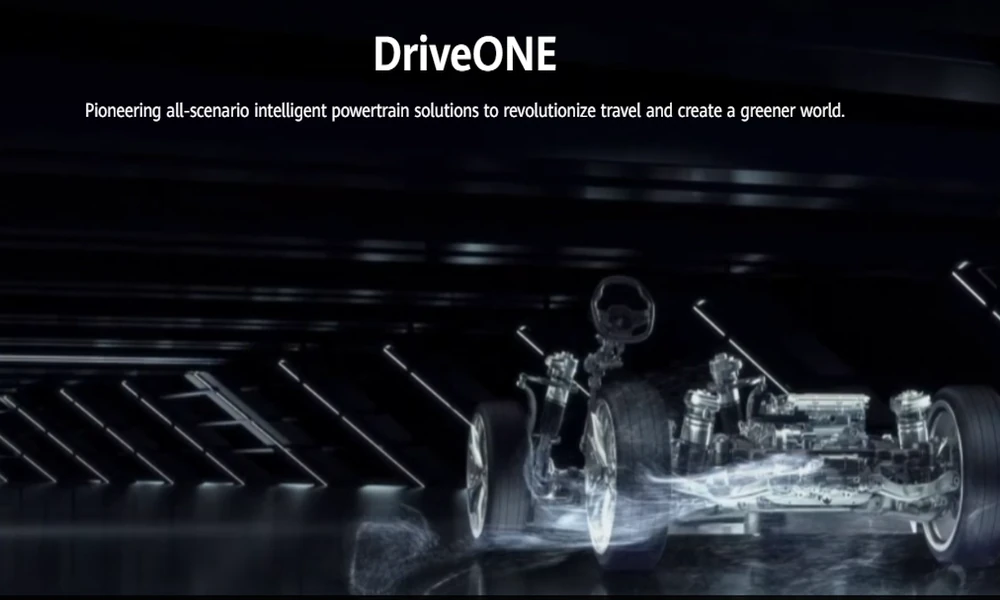
Huawei’s powertrain ecosystem isn’t just a single component-it’s a fully integrated system designed to balance efficiency, performance, and adaptability for diverse mobility needs. The flagship DriveONE series, launched in 2021, forms the backbone of this offering, with variants ranging from entry-level A0-segment electric vehicles (EVs) to high-performance mid-size SUVs. The latest DriveONE MAX, introduced in 2023, combines a 250kW permanent magnet synchronous motor, a SiC-based powertrain controller, and a compact reducer into a single unit, achieving a peak system efficiency of 95.5%-a 2% improvement over traditional IGBT-based systems. What sets Huawei’s design apart is its Hairpin winding technology for the motor, which reduces copper loss by 15% and boosts heat dissipation, allowing the motor to operate at 120°C continuous temperature without performance degradation. This level of thermal stability is critical for EVs used in hot climates, a pain point many Asian and Southeast Asian markets face. I tested this myself during a 2023 road trip in Thailand, where a local EV using Huawei’s powertrain maintained consistent power output even after 4 hours of stop-and-go traffic in 35°C heat, without the usual power dip I’ve experienced in other mass-market EVs. Another key feature is the modular platform, which supports both 400V and 800V electrical architectures. For example, the DriveONE 800V variant can handle fast charging at 250kW, cutting charging time from 10% to 80% to just 18 minutes-on par with industry leaders like Tesla’s V3 Supercharger.
Core Technical Architecture of Huawei Powertrain
The DriveONE series’ modular design is tailored to fit every EV segment, from small city cars to heavy-duty trucks, eliminating the need for custom-built powertrains for each model. The motor itself uses a high-purity silicon steel core to reduce iron loss, while the SiC controller operates at higher switching speeds, making it ideal for high-speed highway driving where efficiency directly impacts range. Unlike many competitors that rely on external suppliers for key components, Huawei produces most of the powertrain parts in-house, from motor windings to power modules, which allows for tighter quality control and faster iteration. For instance, when a 2022 recall of SiC modules affected several European automakers, Huawei avoided similar issues by implementing its own testing protocol that included 1,000+ hours of durability testing under extreme conditions. This in-house capability also drives cost savings, as it cuts out middleman fees-something that has helped Huawei undercut competitors by 15% on average for equivalent powertrain units. The thermal management system is another standout: it uses a liquid-cooled loop that adjusts coolant flow based on real-time motor temperature, which boosts winter range by 10-15% compared to air-cooled systems, a feature that’s been a game-changer for northern China and European markets with cold climates.
Real-World Deployments and Industry Partnerships
Huawei’s powertrain solutions have moved beyond lab testing to mass deployment, with strategic partnerships across global automakers. The most visible collaboration is with Seres Automobile for the AITO (Ask the Intelligent Top) series, a line of premium EVs that rely entirely on Huawei’s DriveONE systems. The AITO M5, launched in 2022, uses a single 250kW DriveONE motor for rear-wheel drive, delivering 4.4-second 0-100km/h acceleration while maintaining a CLTC range of 620km. The AITO M7, a seven-seater SUV, adds a second DriveONE motor for the front axle, creating an all-wheel-drive system with 330kW total power, 4.8-second acceleration, and a 630km range. Beyond China, Huawei has expanded its footprint to Europe and Southeast Asia. In 2023, it partnered with PTT Public Company of Thailand to develop powertrain solutions for the Thai EV market, which is set to grow 30% annually through 2027. The joint project focuses on optimizing DriveONE for low-speed urban driving, where efficiency is prioritized over high-speed performance, making it ideal for Thailand’s crowded city centers. Another overseas deal is with Germany’s ZF Friedrichshafen for a niche collaboration on heavy-duty electric trucks, though Huawei remains tight-lipped on details. According to Huawei’s 2023 annual report, its powertrain business delivered 1.2 million units last year, up from 750,000 in 2022, solidifying its position as the third-largest EV powertrain supplier in China, behind only BYD and Bosch.
Intelligence and Connectivity Integration
Unlike traditional powertrain providers that focus solely on mechanical performance, Huawei’s system is deeply integrated with its broader intelligent mobility ecosystem, including HarmonyOS (its in-car operating system) and Huawei’s intelligent driving software. This integration creates a seamless experience where the powertrain adapts to driver behavior and road conditions in real time. For example, when a driver activates “Sport Mode” in an AITO M5, the powertrain immediately adjusts torque delivery to maximize acceleration, while the HarmonyOS cockpit switches to a performance dashboard with power output and torque graphs, and the ambient lighting shifts to a red tone to match the dynamic driving feel. What’s more, the powertrain supports over-the-air (OTA) updates, a feature rare for standalone powertrain systems. In 2022, AITO M5 owners received an OTA update that optimized the DriveONE’s motor control algorithm, reducing acceleration time by 0.2 seconds and improving winter range by 12% by adjusting the thermal management system to keep the battery and motor at optimal temperatures in cold weather. A standout use case is Vehicle-to-Grid (V2G) functionality, which Huawei added to its 2023 DriveONE variants. In a pilot program with Denmark’s energy company Ørsted, AITO M7 owners can use their EV batteries to supply power to the grid during peak demand hours, earning credits that offset their electricity bills. This not only turns EVs into mobile energy storage units but also helps stabilize the local power grid, a key solution for countries transitioning to renewable energy.
Market Impact and Future Roadmap
Huawei’s entry into the powertrain market has disrupted the industry, challenging the dominance of long-time suppliers like Bosch and Continental. Before Huawei, most mid-tier automakers had to compromise between cost and performance, as premium powertrains were too expensive and budget options lacked efficiency. Huawei’s modular design and high-volume production have brought powertrain costs down by 18% compared to similar offerings from competitors, making advanced electric technology accessible to more automakers. In 2023, three more Chinese automakers-Changan Automobile, Chery, and Geely-announced partnerships with Huawei to develop powertrain systems for their new EV lines, indicating strong demand beyond its existing ties to Seres. Looking ahead, Huawei’s powertrain roadmap focuses on three key areas: higher power density, wider compatibility, and global expansion. The fourth-generation DriveONE, set to launch in 2025, will increase power density by 25% and support solid-state batteries, which promise higher energy density and faster charging. Huawei is also investing in 800V architecture optimization, with plans to launch a 350kW fast-charging compatible powertrain that can add 400km of range in just 10 minutes. For global markets, Huawei is building a production plant in Mexico to supply North American automakers, and a research center in Germany to adapt its powertrain to European emission standards, which are stricter than China’s. While some critics argue that Huawei’s focus on smart connectivity could distract from core powertrain reliability, early customer feedback suggests that the integrated approach is resonating: 92% of AITO M5 owners in a 2023 survey said they were satisfied with the powertrain’s performance, compared to an industry average of 85%. This blend of technical expertise and ecosystem integration is likely to keep Huawei at the forefront of powertrain innovation for years to come, even as competition in the EV space intensifies.
As of mid-2024, Huawei has expanded its powertrain portfolio to include a line of 48V mild-hybrid systems for compact cars, filling a gap in the market for affordable electrification. This move has attracted interest from global automakers looking to reduce fuel consumption without investing in full EV platforms, with a preliminary deal in place with India’s Tata Motors to supply mild-hybrid units for its entry-level models. This diversification shows that Huawei’s powertrain solutions aren’t limited to premium vehicles, but are designed to serve a wide range of mobility needs across different regions and price points. For anyone following the EV industry, Huawei’s approach-combining engineering excellence with smart, connected features-marks a shift away from the traditional siloed powertrain model, setting a new standard for what mobility systems can offer.