
Key Takeaways
- Exercise before surgery helps strengthen muscles and improve mobility before the procedure.
- Early rehabilitation focuses on reducing stiffness, restoring movement, and improving circulation.
- Strengthening and low-impact exercises support long-term knee function after recovery.
- Follow the rehabilitation plan provided by an orthopaedic specialist to ensure exercises match your recovery stage.
- Gradual progression is safer than returning to demanding activities too quickly.
Introduction
Preparing for knee replacement surgery in Singapore involves more than the operation itself. Exercise before and after surgery helps improve strength, flexibility, and overall mobility, which can contribute to a smoother recovery. Before surgery, exercises aim to strengthen the muscles supporting the knee and maintain joint movement. After surgery, rehabilitation focuses on restoring the range of motion, rebuilding strength, and helping patients return to everyday activities. Every recovery programme should be based on individual needs and guided by an orthopaedic specialist and physiotherapist.
Exercises Before Surgery
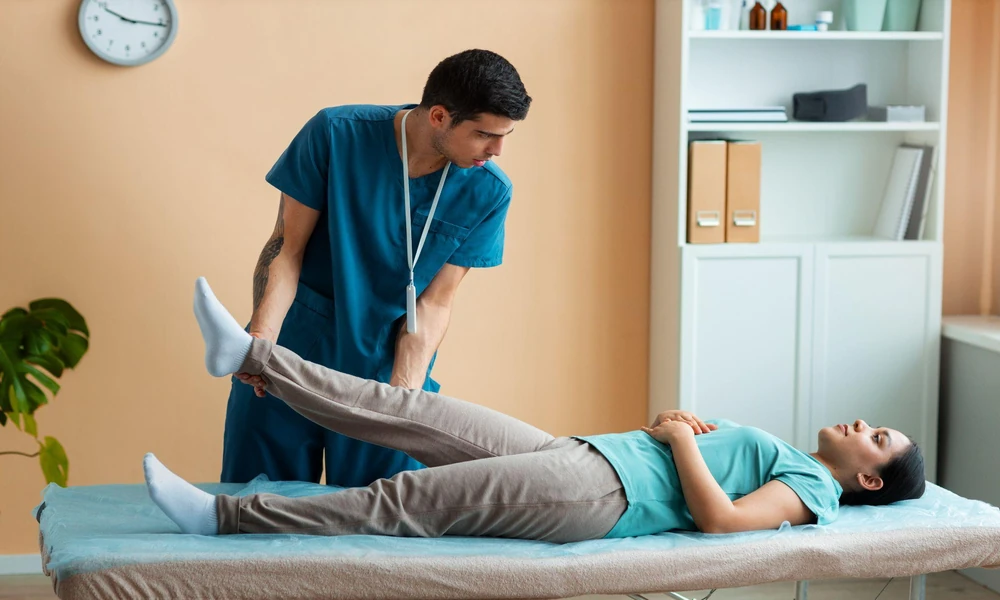
Pre-operative exercise, often called prehabilitation, prepares the body for surgery. Strong quadriceps and hamstrings provide better support for the knee, making rehabilitation after surgery more manageable. Straight leg raises are commonly recommended because they strengthen the thigh muscles without placing excessive pressure on the joint. Quadriceps sets, where the thigh muscles are tightened while the leg remains straight, help maintain muscle activation. Gentle hamstring and calf stretches improve flexibility, while seated knee extensions help preserve joint movement. Low-impact activities such as stationary cycling or swimming may also be suitable for maintaining cardiovascular fitness without placing unnecessary stress on the knee. These exercises should be performed according to medical advice to avoid worsening existing joint damage.
Early Exercises After Surgery
Rehabilitation usually begins within the first day after surgery. The initial goal is to improve circulation, reduce stiffness, and encourage gentle knee movement. Ankle pumps are frequently recommended to promote blood flow and reduce swelling. Heel slides help improve knee bending by slowly sliding the foot towards the body while lying down. Quadriceps sets and gluteal squeezes reactivate muscles that may weaken after surgery and prolonged bed rest. These simple exercises are repeated several times each day and gradually become easier as pain and swelling decrease. Early movement also supports confidence when standing and walking with mobility aids.
Strengthening During Recovery
As healing progresses, rehabilitation focuses on rebuilding muscle strength and improving balance. Straight leg raises remain useful during this stage, while standing hamstring curls strengthen the muscles behind the thigh. Seated knee bends continue to improve flexibility, and mini squats help restore lower-body strength when introduced at the appropriate stage. Step-up exercises may also be included to prepare patients for climbing stairs safely. Walking becomes an important part of rehabilitation, beginning with short distances using a walker or walking stick before gradually increasing duration and independence. The pace of recovery differs between individuals, so exercise progression should follow professional guidance from an orthopaedic specialist rather than personal expectations.
Long-Term Exercise and Joint Health
After completing formal rehabilitation, regular low-impact exercise helps maintain the benefits of surgery. Walking remains one of the simplest ways to improve endurance and support joint function. Swimming and water-based exercises reduce pressure on the knee while allowing full-body movement. Stationary cycling encourages flexibility and strengthens surrounding muscles through controlled motion. Gentle stretching helps reduce stiffness and maintain joint mobility, while balance exercises improve stability and may lower the risk of falls. High-impact activities such as running and jumping may not be appropriate for every patient and should only be considered after professional assessment.
Conclusion
Exercise plays an important role before and after knee replacement surgery. Preparing the muscles before surgery and following a structured rehabilitation programme afterwards can improve strength, mobility, and functional recovery. Progress should always be gradual, with exercises tailored to individual needs. Regular follow-up with an orthopaedic specialist and rehabilitation team helps ensure that recovery remains safe and appropriate for each stage of healing.
Contact Specialist Orthopaedic Centre and let us determine which exercises are suitable for your condition and recovery stage.